

THE ALTOPIANO AND HIS VINEYARDS
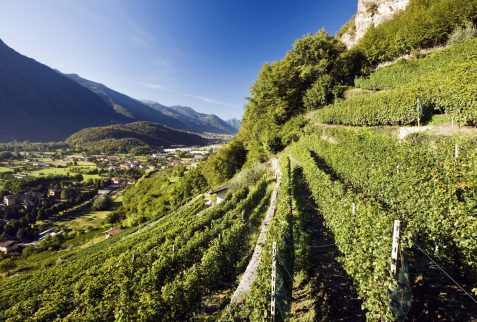
The Altopiano del Sole is a land of wine and vineyards. A centuries-long tradition from the early Middle Ages leads us to the present day, and the importance of vineyard cultivation and wine production in Valle Camonica.
VINEYARDS IN THE MEDIEVAL AGE
The first stop in the history of the vineyards of the Altopiano del Sole is a document dated 845, in which reference is made to an existing vineyard in Breno. In the inventory of property owned by the women’s monastery of San Salvatore-Santa Giulia in Brescia, dating from 905-906, a number of courts in Valle Camonica are mentioned including several vineyards cultivated by servants, from which a total of 65 amphorae of wine were to be collected. The monastery of San Salvatore di Cemmo and several valley parishes also owned land with vineyards, entrusted to servants or tenants from whom they collected rent and tithes in the form of predetermined quantities of wine. In the late Middle Ages, it was no longer only monasteries and ecclesiastical bodies that devoted themselves to the cultivation of vines and the production of wine, but also noble families, most notably the Griffi family of Losine.
VINEYARDS IN THE MODERN AGE
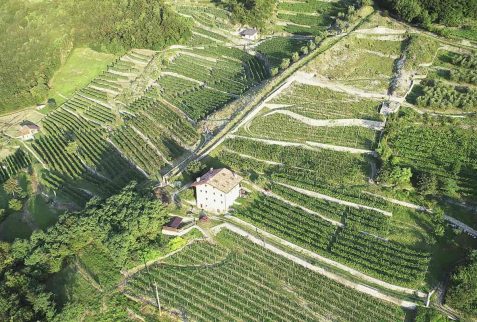
From Father Gregorio Brunelli (1698) we get some valuable information about the methods of cultivation used at that time in Valcamonica: “The vineyards are, or imprisoned between walls in vegetable gardens, or tied to fruit-bearing trees in the fields, or spread out in high arbors around the houses and over the roads, and there is no lack of vines in the manner of thickets with such skill cultivated that from the sites themselves completely stony, wonderfully fruitful grapes are produced.”.
The first document in which the presence of vineyards on the mountain side of Piancogno is found is a deed dated the end of the 11th century. The first document in which the presence of vineyards on the mountain side of Piancogno is found is a deed dated the end of the 11th century. The text – aimed at settling the centuries-long dispute between the inhabitants of Val di Scalve and those of Borno for the ownership of Mount Negrino, rich in pastures – mentions a raid carried out by the Scalvini in the territory of Borno (most likely on the Piancogno side), which ended with the destruction of twelve presses and several vineyards. In the Statute of the community of Borno of 1446, in Article 4, the prohibition of grazing animals, especially goats, in the vineyards of its territory is stipulated. From Giovanni da Lezze’s cadastre of 1609 we learn that “in one part only” of Borno (evidently concerning the mountain side of Piancogno) wines “grateful to the taste…” are produced.